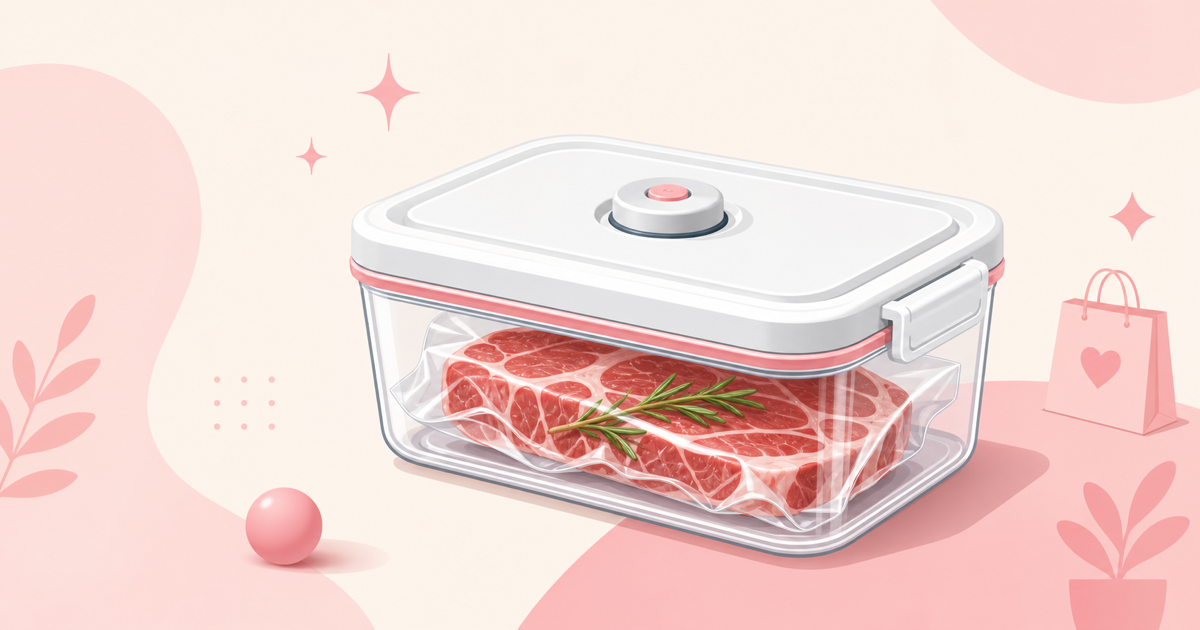

You open the fridge, and vegetables you just bought have already gone limp. A bag of coffee beans loses its aroma within days of opening. Eating leftovers on day three starts to feel like a gamble. Most people who start looking into vacuum storage containers begin from this same everyday frustration: food seems to spoil faster than expected.
Once you start comparing actual products, though, you quickly realize there isn't much to go on. "Vacuum storage container" is a catch-all term that covers wildly different designs — electric pump models, twist-to-seal lids, and bottle-specific stoppers for wine. Vacuum-level specs vary by manufacturer, and it's not obvious how much pressure reduction is actually "enough." Reviews are split between "really convenient" and "doesn't get vacuum-sealed like I expected," making it hard to tell which one fits your needs.
This article organizes six popular vacuum storage containers along three axes — vacuum method, container material, and best-suited food type — and lays out each one's structural strengths and the weaknesses you should know before buying. We'll also cover a key reason reviews are so divided: a mismatch between the food being stored and the sealing method used. By the end, you should know exactly what you want to store in your fridge, and which method fits that need.
How to Choose a Vacuum Storage Container: 4 Criteria for Getting It Right
1. Choose by Vacuum Method: Electric vs. Manual Pump vs. Twist-Seal
Vacuum storage containers fall into three broad types based on how air is removed. This is the single biggest factor in overall satisfaction.
Electric pump models complete the vacuuming with the push of a button, using a pump unit placed on the lid. They reach a high vacuum level with little variation between uses. The downside is the need for charging and battery management — if the pump unit fails, the container can no longer be vacuum-sealed on its own.
Manual pump models remove air by pressing a pump dozens of times. No power source is needed, the structure is simple, and there are fewer parts that can break. The tradeoff is that the effort adds up if you're sealing many containers at once.
Twist/rotation-seal models have the pump mechanism built directly into the lid, and you depressurize by twisting or turning it. There's no separate pump to store, and many designs are attractive enough to leave out on the counter. Vacuum levels often fall short of electric models, but they pair well with foods you open and close frequently.
A good rule of thumb: how many containers do you vacuum-seal in one session? Batch meal-preppers should lean electric; if it's just one canister of coffee beans, manual or twist-seal is plenty.
2. How to Read Published Vacuum-Level Specs
Manufacturers express vacuum level in different ways — "-0.6 atm," "-60 kPa," "removes about 80% of air." The mixed units make comparison tricky, but the conversion isn't hard. One atmosphere is roughly 101 kPa, so -60 kPa means about 60% of the air (relative to atmospheric pressure) has been removed.
No household vacuum storage container reaches a true vacuum (-101 kPa). Misunderstanding this leads to the common complaint of "it doesn't actually vacuum-seal." In practice, the goal is slowing oxidation and flavor degradation, so reaching roughly -0.5 to -0.8 atm is generally enough to see real benefits.
A higher vacuum level isn't always better, either. Strong suction can crush soft foods like tofu, berries, or bread. The right level depends on what you're storing.
3. Container Material: Glass vs. Plastic
Glass resists odor and color transfer, so it holds up well to repeated storage of oily dishes or curry-based sauces. Many glass containers are microwave- and dishwasher-safe, letting you reheat food in the same container — a plus for meal-preppers. The downsides are weight and the risk of breakage if dropped.
Plastic (including resins like Tritan) is light, shock-resistant, and works well in fridge door pockets or for carrying food around. However, oily dishes can more easily cause staining or lingering odors, and heat resistance varies by product — always check before microwaving.
Stainless steel offers excellent light-blocking. Coffee beans and tea leaves degrade under light exposure too, so stainless or opaque materials have an edge if you're leaving containers out on the counter.
4. Matching Food Type to Container Shape
This is easy to overlook, but shape compatibility directly affects satisfaction.
- Coffee beans, tea leaves, powders — tall canister shapes. Since these are opened and closed often, a one-action sealing method is more comfortable
- Meal-prepped dishes, prepped vegetables — shallow, square containers. Whether they stack neatly in the fridge is the deciding factor
- Frozen meat and fish — vacuum bags tend to work better than containers, since less air pocket remains, reducing freezer burn
- Leftover wine — a dedicated bottle stopper. No need to transfer the wine to another container
Also, if a container has a lot of empty space around the food, there's more air to remove, which slows down the sealing process. Choosing a size that matches the amount of food is a small but effective detail.
Spec Comparison Table
| Product | Vacuum Method | Main Container Material | Best For |
|---|---|---|---|
| Zwilling Fresh & Save | Electric / manual pump | Glass, plastic, dedicated bags | Meal prep, frozen meat/fish |
| Ankomn Turn-N-Seal | Twist-seal (built into lid) | Resin (opaque options available) | Coffee beans, powders, dry goods |
| FOSA Vacuum Storage Containers | Automatic pump (shared) | Plastic | Batch storage in the fridge |
| Fellow Atmos Vacuum Canister | Twist-seal (built into lid) | Glass / stainless steel | Coffee beans, tea leaves |
| FoodSaver Vacuum Canisters | Linked to main unit / built-in pump | Plastic | Long-term storage of bulk purchases |
| Vacu Vin Wine Saver | Manual pump + dedicated stopper | Bottle stopper | Leftover wine |
6 Recommended Vacuum Storage Containers
1. Zwilling Fresh & Save
A vacuum storage system from the German cutlery brand Zwilling. What sets it apart is that it's built as a full lineup rather than a single container — glass containers, plastic containers, and vacuum bags can all be sealed with the same shared pump. It also pairs with a dedicated app that logs the storage date and contents. Some glass containers are microwave- and oven-safe, letting you go from storage to reheating without switching containers.
Strengths
- One pump runs across containers and bags, covering any storage need
- Glass models resist odor transfer and can be heated directly
- Combined use with bags covers freezer-burn prevention for meat and fish
Points to consider
- A larger upfront investment, priced around building out the full system
- Requires pump charging management, with the failure risk that comes with any electric device
Best for
People who batch-cook meal prep on weekends, and anyone portioning and freezing meat or fish. Households using multiple storage methods benefit most from a unified system.🛒 Check the price →
2. Ankomn Turn-N-Seal
A vacuum container that depressurizes with a simple twist of the lid's dial — no power source or pump required. The vacuum mechanism is built directly into the lid, so there's no extra tool to keep track of. The manufacturer states a high vacuum level, and performance is solid for a power-free design. Opaque models are also available, which is genuinely useful for coffee beans and dry goods that degrade under light.
Strengths
- No batteries, charging, or separate pump — fewer points of failure
- One-action re-sealing, even for foods opened and closed frequently
- Opaque versions available, suited to coffee beans and tea leaves
Points to consider
- The twist mechanism means more turns (and more effort) on larger models
- Mostly non-rectangular shapes, less efficient for stacking in the fridge
Best for
Anyone who regularly stocks coffee beans, tea leaves, nuts, or powders, and those who want a simple, power-free design.🛒 Check the price →
3. FOSA Vacuum Storage Containers
Just set the dedicated pump on top of the container and it automatically completes the vacuum-sealing. Multiple container sizes come as a set, sharing a single pump. You can standardize your fridge storage while keeping each container vacuum-sealed. The mostly rectangular shape design minimizes dead space when stacked on shelves.
Strengths
- A shared-pump set keeps running costs low even as you add more containers
- Stackable shape helps organize the fridge and preserve freshness at once
- Automatic operation means consistent vacuum strength regardless of who uses it
Points to consider
- Being plastic, oily or strongly spiced dishes can leave staining or odor
- If the pump unit fails, the containers alone can no longer be vacuum-sealed
Best for
People who want to manage meal-prepped or pre-prepped vegetables in matching container sizes, and anyone looking to organize their fridge at the same time.🛒 Check the price →
4. Fellow Atmos Vacuum Canister
A canister from coffee gear brand Fellow, with the vacuum mechanism built into the lid. A few twists of the lid removes the internal air, and some models include an indicator showing vacuum status. Available in glass and stainless steel — choose stainless for light-blocking, or glass if you want to see the contents. The design is meant to be left out on the kitchen counter, fitting in as a display-worthy piece of equipment.
Strengths
- Built-in lid design with no separate parts, re-sealing with a near one-handed motion
- Stainless models block light, reducing bean degradation from exposure
- An appearance suited for leaving out, so it stays in regular use
Points to consider
- The canister shape isn't suited to flat storage like meal-prepped dishes
- Priced at the higher end per unit of capacity, adding up if you buy several
Best for
Anyone who brews coffee daily or wants to preserve tea aroma, and those who care about kitchen aesthetics.🛒 Check the price →
5. FoodSaver Vacuum Canisters
Canisters from FoodSaver, known for its vacuum sealing machines. The basic setup connects to the brand's sealer unit via an accessory hose to draw out air — if you already own a FoodSaver sealer, you only need to add the containers. This is a solid option for anyone who wants to split bulk purchases between bags and containers to build a long-term storage system.
Strengths
- Taps into the sealer's suction power, offering fairly strong vacuum for home use
- Bags and containers work within the same system, letting you match the method to the food
- Lets you store items you don't want crushed in a container instead of a bag
Points to consider
- Built around owning the main sealer unit — the containers may not vacuum-seal on their own in some configurations
- Requires connecting a hose, less of a grab-and-go option than other methods
Best for
People who already own a FoodSaver sealing machine, households that buy in bulk, and anyone who wants a structured approach to long-term storage.🛒 Check the price →
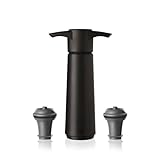
6. Vacu Vin Wine Saver
A dedicated stopper-and-manual-pump set focused specifically on slowing oxidation in leftover wine. Just insert the rubber stopper into the bottle and pump out the air. No need to transfer the wine to another container — you can store it right in the bottle, label and all. The design is simple, the only consumable is the stopper itself, making this an easy, low-cost entry point into vacuum storage.
Strengths
- Works directly in the bottle, with no extra dishes beyond your wine glass
- No power source and a simple structure, with almost nothing to break
- Affordable, making it easy to experience the benefits of vacuum storage firsthand
Points to consider
- Only usable for wine, with no general food storage application
- Not suitable for sparkling wine (the carbonation would be lost)
Best for
Anyone who drinks a bottle over several days, and those who want an affordable way to first try out vacuum storage.
How to Choose by Purpose
First-time vacuum storage users — Rather than jumping straight into a full system, it's safer to start with a standalone, power-free product like View on Amazon → or View on Amazon →. This lets you judge whether vacuum storage fits your lifestyle with minimal investment.
Preserving coffee and tea freshness — View on Amazon → or View on Amazon →. Both have built-in lids, so re-sealing after daily use isn't a hassle. If light-blocking matters to you, choose the opaque or stainless steel option.
Streamlining meal prep — A stackable rectangular set like View on Amazon → is practical. If you want to go from storage to reheating in the same container, the glass options in View on Amazon → have the advantage.
Serious bulk buying and long-term storage — View on Amazon → or View on Amazon →. A system that combines bags and containers makes it easier to find the best fit for each type of food.
If you want one all-rounder — View on Amazon → for storage versatility, or View on Amazon → for ease of use and reliability — a clear two-way choice.
FAQ
Q. How much longer does food last with vacuum storage?
This varies significantly by food type and storage temperature, so no single figure applies across the board. Vacuum storage mainly slows oxidation from oxygen and the growth of aerobic bacteria — foods that require low temperatures still need to be combined with refrigeration or freezing. Keep in mind that vacuum-sealing doesn't mean you can switch to room-temperature storage.
Q. How often do I need to replace the gasket?
It depends on usage frequency and how the container is washed, but the gasket is a consumable part. Signs it's time to replace it include the rubber becoming stiff, warping and lifting out of its groove, or the vacuum no longer holding until the next day. Before buying, it's reassuring to check whether the brand sells replacement gaskets separately, for long-term use.
Q. Which is better, electric or manual?
The practical way to decide is by how many containers you vacuum-seal at once. The more you batch-prep, the more you benefit from electric; if one or two containers a day covers your needs, manual or twist-seal won't feel inconvenient. Electric models reach a higher, more consistent vacuum level, but come with the tradeoffs of charging management and the risk of pump failure — worth weighing as part of your decision.
Q. Can I vacuum-seal any type of food?
Some foods aren't suited to it. Soft items like tofu, berries, and bread can be crushed by the reduced pressure, and foods that continue to ferment (like dough or rice-bran pickles) produce gas that prevents the vacuum from holding. Carbonated drinks and sparkling wine are also unsuitable, since the vacuum removes the carbonation. Fresh produce that continues to respire, like mushrooms, may also call for a dedicated storage method instead.
Q. Can these go in the microwave or dishwasher?
It depends on the material and the specific product. Many glass containers are microwave- and dishwasher-safe, but the lid, gasket, and pump parts are typically not. Some products also specify removing the lid, or releasing the vacuum, before heating — check what's supported for both the container and the lid before buying.
Q. The vacuum seal was gone by the next day. Is it broken?
First, check the gasket's fit and whether there's any residue on the container's rim. Food debris or oil caught in the seal alone can break the airtightness. If it still won't hold after that, a worn gasket or a faulty lid valve may be to blame. Also, if you're storing something that ferments or releases gas, the issue may be the contents rather than a product defect.
Summary
If you're stuck choosing a vacuum storage container, these four points will narrow it down:
To sum up by reader type: for a first product, try View on Amazon → or View on Amazon →; for coffee and tea, View on Amazon →; for meal prep, View on Amazon →; for serious long-term storage, View on Amazon →; and for all-around storage versatility, View on Amazon →.
A vacuum storage container isn't a tool that "makes food last just by buying it" — it's a tool that only works once you match the method to the food you want to store. Start by picturing the one food in your fridge that feels like the biggest waste right now, then work backward to the right method for it.


![[2026 Latest] Top 5 Yogurt Maker Rankings|Complete Comparison Guide](/images/eyecatch/articles/yogurt-maker-ranking-top5.png)
![[2026 Latest] Top 5 Bento Box Rankings|A Thorough Comparison](/images/eyecatch/articles/bento-box-recommended-ranking-top5.png)
![[2026 Latest] Cutting Board Comparison: A Thorough Test of Wood, Plastic, and Antibacterial Materials](/images/eyecatch/articles/cutting-board-comparison-2026.png)
![[2026 Latest] Best Electric Kettles Compared — Which One Should You Buy?](/images/eyecatch/articles/electric-kettle-ranking-comparison-2026.png)