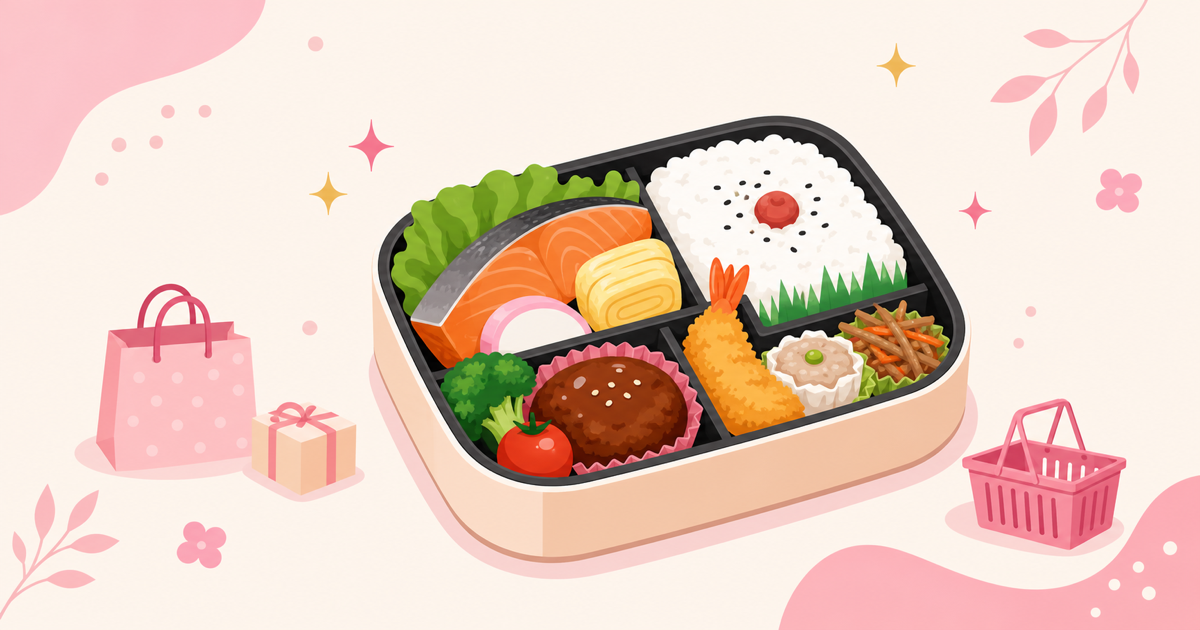
A bento box is a classic case of "choosing by looks and regretting it." You pick one for its cute design, but once you start using it daily, complaints pile up: sauce leaking into your bag, no microwave compatibility, or a gasket groove that's such a pain to clean you give up on making lunch altogether. Since it's a tool you use every day, even one small annoyance can become the reason you quit packing lunches.
Capacity is another tricky point. Online reviews calling a box "just the right size" only reflect that reviewer's body size and appetite. Even at the same 600ml, a deep box and a shallow one pack very differently, and a two-tier box takes up a different shape in your bag even with the same total capacity. Comparing spec numbers alone won't tell you if a box actually fits you.
This article breaks down the five criteria that actually matter when choosing a bento box — down to exactly what to check in the spec sheet. Then we compare seven popular models across different types, covering not just the strengths but the drawbacks too. By the end, you'll be able to narrow it down to the one box that matches your appetite, your commute style, and how much time you can spend on dishes.
How to Choose a Bento Box|5 Criteria That Prevent Regret
① Reverse-Calculate Capacity Using "ml ≈ kcal"
There's a handy rule of thumb that's been used for choosing bento box capacity for years: capacity (ml) ≈ that lunch's calories (kcal). When rice and side dishes are packed at a normal density, a 600ml box comes out to roughly 600 kcal.
You can use this to reverse-calculate from your body size and activity level. For an adult man eating around 2,000 kcal a day, allocating 30% to lunch works out to 600–700ml; those who want to eat heartily or who are very active should look at 800–900ml. Women or those watching their calorie intake should aim for 500–600ml, and young elementary school children around 400ml.
One thing to watch for: the capacity listed by the manufacturer is usually the level-full internal volume. In practice, the amount you can fit with the lid closed is 10–20% less than the listed figure — keeping that in mind avoids the "it holds less than I thought" surprise after buying.
② Judge Seal Quality by "Lock Type" and "Gasket Shape"
For leak prevention, look at the lid-locking mechanism and the gasket. In order of strength, a 4-point lock that secures all four sides offers the tightest seal, followed by a snap-seal lid that fits the whole lid in place, and the loosest is a simple pop-on lid that just sits on top.
That said, even if the product description says "sealed" or "leak-resistant," you should avoid putting liquid soup directly in unless it's explicitly marketed for soups. When the spec sheet just says "leak-resistant," that usually refers to something like simmered-dish sauce, not liquid soup. If you commute with your bag lying on its side, requiring a 4-point lock plus a silicone gasket is the safer bet.
③ Understand Each Material's Strengths
| Material | Strengths | Weaknesses |
|---|---|---|
| Polypropylene (PP) | Lightweight, microwave-safe, easy to handle | Oil stains and discoloration tend to linger |
| Stainless steel | Durable, resists odor transfer | Not microwave-safe |
| Wood / bent wood (magewappa) | Absorbs excess moisture, keeps rice tasting good | Requires hand-washing, takes time to dry |
Check the heat-resistance temperature in the spec sheet. PP bodies are typically rated around 120°C, but lids and gaskets often have a lower heat tolerance — in that case, "remove the lid before microwaving" is the correct usage. Many products labeled "wood-grain" are actually resin made to mimic wood texture, and are just as easy to handle as PP.
④ Check Microwave and Dishwasher Compatibility Separately for Body, Lid, and Gasket
An easy thing to overlook is that compatibility can differ part by part. Combinations like "body is microwave-safe, lid is not" or "body is dishwasher-safe, gasket is hand-wash recommended" are common.
If you have a microwave at work and want to reheat your lunch, microwave compatibility is a must. On the other hand, if you want to carry your lunch hot, prioritize heat retention over microwave compatibility — in that case, a vacuum-insulated lunch jar is the better choice.
⑤ "Cleaning Effort" Comes Down to Number of Parts
The single biggest factor in whether you'll stick with a bento box is how easy it is to wash. This can be judged by the number of parts you need to disassemble and clean. A simple two-part structure (body + lid) versus a five-part structure (body + lid + gasket + divider + band) makes a huge difference to your daily burden.
Seal quality and ease of cleaning are fundamentally a trade-off. More gaskets and grooves mean better leak resistance, but also more places for grime to collect. Deciding upfront which one you prioritize will make the decision much easier.
Spec Comparison Table
| Product | Approx. Capacity | Main Material | Structure/Type | Microwave-Safe |
|---|---|---|---|---|
| Skater Bento Box 800ml Lunch Box | ~800ml | Polypropylene | Single-tier, with divider | Yes (except lid) |
| Sub Hiromori Stainless Steel Bento Box, 2-Tier | Medium capacity | Stainless steel | 2-tier | No |
| Tiger Thermos Insulated Bento Box, Stainless Steel | 3-container set | Stainless steel / resin | Lunch jar | Some containers only |
| Lock&Lock Bento Box 4-Point Lock 620ml | ~620ml | Polypropylene | Single-tier, 4-point lock | Yes (except lid) |
| OSK Bento Box Wood-Grain 2-Tier, Made in Japan | Medium-large capacity | Resin (wood-grain) | 2-tier | Check product specs |
| Pearl Metal Bento Box One-Push 600ml | ~600ml | Polypropylene | Single-tier, one-push opening | Yes (except lid) |
| MUJI Polypropylene Bento Box | Small-medium capacity | Polypropylene | Single-tier | Yes (except lid) |
*Specifications vary by model and production period. Please check the product page before purchasing.
7 Recommended Bento Boxes
Lock&Lock Bento Box 4-Point Lock 620ml
This model brings Lock&Lock's storage-container expertise straight into a bento box. The combination of a 4-point lock that clamps the lid on all four sides and a silicone gasket makes it one of the most reliably sealed options around. At 620ml, it sits between a standard capacity for adult women and a lighter portion for men, and the divider lets you separate rice from side dishes.
Strengths
- The 4-point lock plus gasket resists leaks even when laid on its side in a bag
- As you'd expect from a storage container maker, it also works well for carrying pre-made meals
- Removing the lid lets you reheat it in the microwave
Drawbacks
- The lock tabs and gasket groove mean more parts to wash
- Undoing the locks takes more steps than a type you can open one-handed
Best for: People commuting by train or bike who absolutely can't risk a mess in their bag, as well as anyone who often packs saucy side dishes.🛒 Check the price →
Tiger Thermos Insulated Bento Box, Stainless Steel
This is a so-called lunch jar type, housing separate rice, side-dish, and soup containers inside a vacuum-insulated case. Since it keeps food warm during transport, it's irreplaceable for people without a microwave at work, or who eat lunch outdoors. Its core strength as a thermos maker translates directly into this category.
Strengths
- Vacuum insulation keeps meals warm even without access to a microwave
- Separate compartments for rice, side dishes, and soup prevent flavors and smells from mixing
- Stainless steel exterior resists scratches and odors, suited to long-term use
Drawbacks
- Multiple containers make it bulkier and heavier than other types
- Heat-retention performance (temperature after 6 hours) varies by model, so check the spec sheet carefully
Best for: Anyone who wants a hot lunch even in winter, or works somewhere without a microwave. Also good for those who don't mind carrying slightly bulkier luggage.🛒 Check the price →
Skater Bento Box 800ml Lunch Box
This large-capacity model comes from Skater, a maker known for a wide range of bento boxes and water bottles. At roughly 800 kcal in calorie terms, 800ml suits people who want to eat heartily. Its depth makes it easy to pack side dishes upright, and since this capacity is achieved in a single tier, you avoid the extra hassle of washing separate top and bottom sections like a two-tier box requires.
Strengths
- Achieves a large 800ml capacity in a single tier, giving flexibility in how you pack it
- The divider separates rice from side dishes, reducing flavor transfer
- Removing the lid makes it microwave-compatible
Drawbacks
- Its large size means it may not fit in smaller bags
- Seal quality isn't as strong as a 4-point-lock model, so it's less suited to saucy dishes
Best for: Men with big appetites, or people who burn a lot of calories through sports or physical work. Well suited to anyone who wants to pack a generous amount of rice.🛒 Check the price →
MUJI Polypropylene Bento Box
Characterized by an undecorated, translucent, simple structure. True to MUJI's style, it has few parts and corners designed with easy cleaning in mind, making it one of the least likely types to fall into the "too much of a hassle to wash every day" failure mode. It also pairs well with the brand's other storage containers and organizers.
Strengths
- Fewer parts mean minimal daily dishwashing effort
- A design that doesn't stand out regardless of gender or age, fitting in well at the office
- Matches the size and finish of other items in the same brand lineup
Drawbacks
- No strong locking mechanism, so it's not suited to soupy dishes
- Because it's translucent, staining from oily foods can become noticeable over time
Best for: People who want a design that doesn't call attention to itself. Also suited to those who prioritize ease of cleaning above all when trying to build a lunch-packing habit.🛒 Check the price →
OSK Bento Box Wood-Grain 2-Tier, Made in Japan
A two-tier box with a wood-grain finish that recreates the texture of real wood, giving it a Japanese-style aesthetic. Since the material is resin rather than genuine bent wood (magewappa), it doesn't require the careful hand-washing and air-drying that real wood does — combining good looks with everyday practicality. Being made in Japan is also a point of reassurance for those who care about attention to detail.
Strengths
- The wood-grain design looks presentable straight out of the bag
- The two-tier structure fully separates rice and side dishes, preventing flavor transfer
- Being resin, it has far fewer maintenance restrictions than natural wood
Drawbacks
- The two-tier design means more parts to wash and more bulk to store
- Seal quality isn't very strong, so soupy dishes should be kept minimal
Best for: People who care about appearance, or anyone looking for a gift. Also good for those who want to keep rice and side dishes strictly separated.🛒 Check the price →
Pearl Metal Bento Box One-Push 600ml
A single-tier box with a one-push lid release — just press a button to unlock. At 600ml, it hits the most versatile capacity range, suiting standard lunch portions for both men and women. Its straightforward structure is easy to handle, and because it doesn't overload on features, it comes at a more accessible price point, making it an easy first choice.
Strengths
- One-push opening makes it easy to open even one-handed
- The versatile 600ml capacity makes it easy to adjust how much you pack
- Covers the basics, including microwave compatibility, at an entry-level price
Drawbacks
- The button mechanism's grooves need careful cleaning
- Seal quality is inferior to 4-point-lock models, so some risk of leaks remains
Best for: First-time bento box buyers, or those who want the basics covered while keeping costs down. Also convenient for anyone who wants to open their lunch quickly at the office.🛒 Check the price →
Sub Hiromori Stainless Steel Bento Box, 2-Tier
A stainless steel two-tier model from Sub Hiromori, a brand known for design-forward goods. Stainless steel resists oil and odor absorption, so there's less risk of the interior yellowing over time the way resin can — making it well suited to anyone who wants to use the same box for years. Its metallic finish also gives it a different sense of cleanliness compared to resin models.
Strengths
- Stainless steel resists odor and color transfer
- Resistant to scratches and warping, holding up to long-term use
- The two-tier structure lets you separate rice and side dishes
Drawbacks
- Being metal, it can't go in the microwave, so you can't reheat food
- Often not dishwasher-safe, generally requiring hand-washing
Best for: People who eat their lunch at room temperature without reheating. Also suited to anyone who often packs dishes like curry or meat sauce that tend to leave behind odors and stains.
Choosing by Use Case
First-time bento box buyers should start with the Pearl Metal Bento Box One-Push 600ml or the MUJI Polypropylene Bento Box. Both have simple structures, are easy to wash, and involve minimal loss if the habit doesn't stick.
Anyone worried about leaks on a train commute should go straight for the Lock&Lock Bento Box 4-Point Lock 620ml. Its sealing performance is the strongest of these seven, holding up even when you're forced to carry it standing upright in a bag.
Anyone who wants to eat a lot has one clear choice: the Skater Bento Box 800ml Lunch Box. If you've ever found a box in the 600ml range too small, going straight for the 800ml range tends to leave you more satisfied in the end.
Anyone who insists on a hot lunch, or works somewhere without a microwave, should choose the Tiger Thermos Insulated Bento Box, Stainless Steel. It offers value no other type here can replace, and makes a big difference to satisfaction during winter.
Anyone who prioritizes appearance or gifting should consider the OSK Bento Box Wood-Grain 2-Tier, Made in Japan, while anyone who wants durability for long-term use should look at the Sub Hiromori Stainless Steel Bento Box, 2-Tier. For the latter, the key question is whether you can accept not being able to use a microwave.
FAQ
Q. What capacity should I choose for a bento box?
The "capacity (ml) ≈ calories (kcal)" rule of thumb is a useful guide. As a baseline, adult men should aim for 600–800ml, adult women for 500–600ml, and elementary school children for around 400ml. Keep in mind that the manufacturer's listed figure is the level-full internal volume, so the amount you can actually pack will be 10–20% less. If you're unsure, choosing slightly larger and adjusting how much you pack tends to be the safer bet.
Q. Where should I check for microwave compatibility?
Check the "microwave-safe" note in the product page's spec sheet, along with the heat-resistance temperature. The key point is that compatibility often differs between the body, lid, and gasket. For most resin bento boxes, the correct usage is "remove the lid and heat the body only." Stainless steel boxes, being metal, can never go in the microwave under any circumstances.
Q. What should I do about odors or stains on the gasket?
As a rule, always remove the gasket to wash it separately. Food debris left in the grooves can cause odors or mold. If odor is a concern, soaking it in oxygen-based bleach can help, but check the instruction manual first since not all materials support this. Gaskets are a consumable part, so if one hardens or shrinks, check the manufacturer's page for a replacement.
Q. When should I replace my bento box?
For resin boxes, a good sign is when stains or fine scratches build up on the inside that won't come out. Grime settling into scratch grooves becomes a hygiene concern. If the gasket loses its elasticity and can no longer seal properly, and no replacement part is available, it's time to replace the whole unit. Stainless steel boxes tend to have a longer body lifespan, and can often keep going for a long time as long as parts like the gasket can be replaced.
Q. What should I watch out for regarding food poisoning in summer?
The most important step is letting side dishes cool completely before packing them. Sealing food while it's still warm traps steam inside, creating an environment where bacteria can multiply easily. Make sure to drain excess liquid, and avoid moisture-heavy ingredients like raw vegetables or soft-boiled eggs as a general rule. Using an ice pack or insulated bag together is also effective. On the other hand, vacuum-insulated lunch jars are designed to hold food hot, so follow the correct usage instructions specific to that product.
Conclusion
When choosing a bento box, the five things to check are capacity, seal structure, material, microwave compatibility, and ease of cleaning. Since seal quality and ease of cleaning are especially a trade-off, deciding which one you prioritize in advance will make the choice much easier.
- A safe first box → Pearl Metal Bento Box One-Push 600ml / MUJI Polypropylene Bento Box
- Leak prevention as top priority → Lock&Lock Bento Box 4-Point Lock 620ml
- Want to eat a hearty amount → Skater Bento Box 800ml Lunch Box
- Won't compromise on a hot lunch → Tiger Thermos Insulated Bento Box, Stainless Steel
- Design and gifting → OSK Bento Box Wood-Grain 2-Tier, Made in Japan
- Durability for long-term use → Sub Hiromori Stainless Steel Bento Box, 2-Tier
Put into words how much you eat, your commute style, and how much time you can spend on dishes — and the right bento box for you will naturally become clear.


![[2026 Latest] Top 5 Yogurt Maker Rankings|Complete Comparison Guide](/images/eyecatch/articles/yogurt-maker-ranking-top5.png)
![[2026 Latest] Cutting Board Comparison: A Thorough Test of Wood, Plastic, and Antibacterial Materials](/images/eyecatch/articles/cutting-board-comparison-2026.png)
![[2026 Latest] Best Electric Kettles Compared — Which One Should You Buy?](/images/eyecatch/articles/electric-kettle-ranking-comparison-2026.png)
![Pressure Cooker Comparison [2026 Edition] | Pro-Picked Rankings for the Best Models](/images/eyecatch/articles/pressure-cooker-comparison-2026.png)